

Lumbermen in Line
As I puzzle out a book on redwoods, it makes sense I’d come to writing about trees. They’re in the blood.

Henry McNally, born in 1790 in the village of Aghagallon in what is now Northern Ireland, knew well how few choices lay open to a young Roman Catholic under a regime run by and for the United Kingdom’s ruling Protestants. His lowly start as a working stiff likely came in the mobile sawmill operations moving across his homeland to cut and saw the last of the island’s forests into lumber.
The British Royal Navy was a major customer. Grown massive to expand global empire, naval operations consumed stupendous quantities of wood. The HMS Victory, Admiral Nelson’s flagship at the Battle of Trafalgar in 1805, incorporated the lumber of 2,500 mature oaks and elms. Multiply that by the 300 or so ships the navy built and maintained, and their wood represented approximately 1.2 million trees. The verdant forests of colonial Ireland offered ready plunder to build the United Kingdom’s vessels of war.
Henry knew his backbreaking work in the sawmills would never get better; he was a Catholic. Sometime around 1830 he decided the moment was right to trade impossible Ireland and its anti-Catholic overlords for the beckoning United States and its promised freedom.
Family lore has it that he landed in Irish Catholic–friendly Boston and headed toward southeastern Ohio. The forests at the foothill edge of the Appalachians spoke to a man used to felling and sawing trees for a hard-won living, and the low, rounded hills reminded him of the drumlins back home in County Antrim. Henry settled in the village of Somerset and started a family supported by sawmill and carpentry.
Perry County drew both German and Irish immigrants: Sullivans, Sniders, Clouses, and Fincks, among others. They farmed and logged and built houses and barns with lumber sawn from trees they felled in the shrinking forests outside town.
Henry’s son Arther McNally married Josephine Snider, and the couple quickly brought 11 children into the world. One pregnancy after another wore Josephine out. Her last produced twins; the girl arrived stillborn, and the surviving infant boy was given the masculine form, Joseph, of his failing mother’s name. She died when he was less than four months old.
Joseph McNally’s elder brother James moved to the big city of Columbus, where he and another Somerset alum in 1892 founded the J. J. Snider Lumber Co. Twenty-one years later Snider sold the company to James, who renamed it J. E. McNally Lumber Co. and made a spot for Joseph to help manage the business. The company typified lumber operations of the time: wholesaling both hardwoods and softwoods to builders and contractors, providing millwork for home building, and retailing to DIYers.
Then came the Depression. Amid the financial collapse, James died, and Joseph lost or sold off his share of the namesake company. In time he acquired Grandview Lumber, named for the Columbus suburb where it sat. At Grandview Joseph ran a lumber business much the same as McNally, only smaller.
Robert, Joseph’s third son and my father, got into lumber at Grandview, working out of high school as a truck driver, lumber handler, and millworker. Just days after Pearl Harbor, he was drafted. As a junior officer with a field artillery battalion in the 30th Infantry Division, he was fighting through the Normandy hedgerows less than a month after D-Day when Joseph died of a heart attack, his second, back in Columbus. Weeks went by before the son got word of his father’s death.
Once the war ended and Robert returned to Columbus, he became Grandview Lumber’s general manager. Something about the job never sat right with him. His domineering mother, Margaret Sullivan McNally, remembered the good days at McNally Lumber and expected Grandview to be her widow’s sinecure. The economy had different plans. The postwar building boom transformed the lumber industry from a constellation of small firms serving local markets to ever-larger corporations acting nationally, even globally, and sucking small operations into their corporate maws. Grandview Lumber was an out-of-date dinosaur shrinking in fear at Weyerhauser’s salivating T. rex.
My father sold failing Grandview to McNally Lumber – the irony was not lost – and took a sales job with Cincinnati-based hardwood wholesaler Purdy Ammon. He traveled to sell lumber to retailers and manufacturers and visited sawmills here and there to check out their stocks of oak, elm, ash, cherry, and walnut. When the company underwent an upheaval that saw the Grand Rapids, Michigan, lumber yard split off to become Budres Lumber, Purdy Ammon moved my father north from Columbus to fill the gap. That move was probably a set-up for the firing to follow. Robert then moved over to Budres in much the same role he’d had at Purdy Ammon, traveling and selling until the company urged him into early retirement after coronary bypass surgery. About that my father carried unshakable resentment as long as he lived.
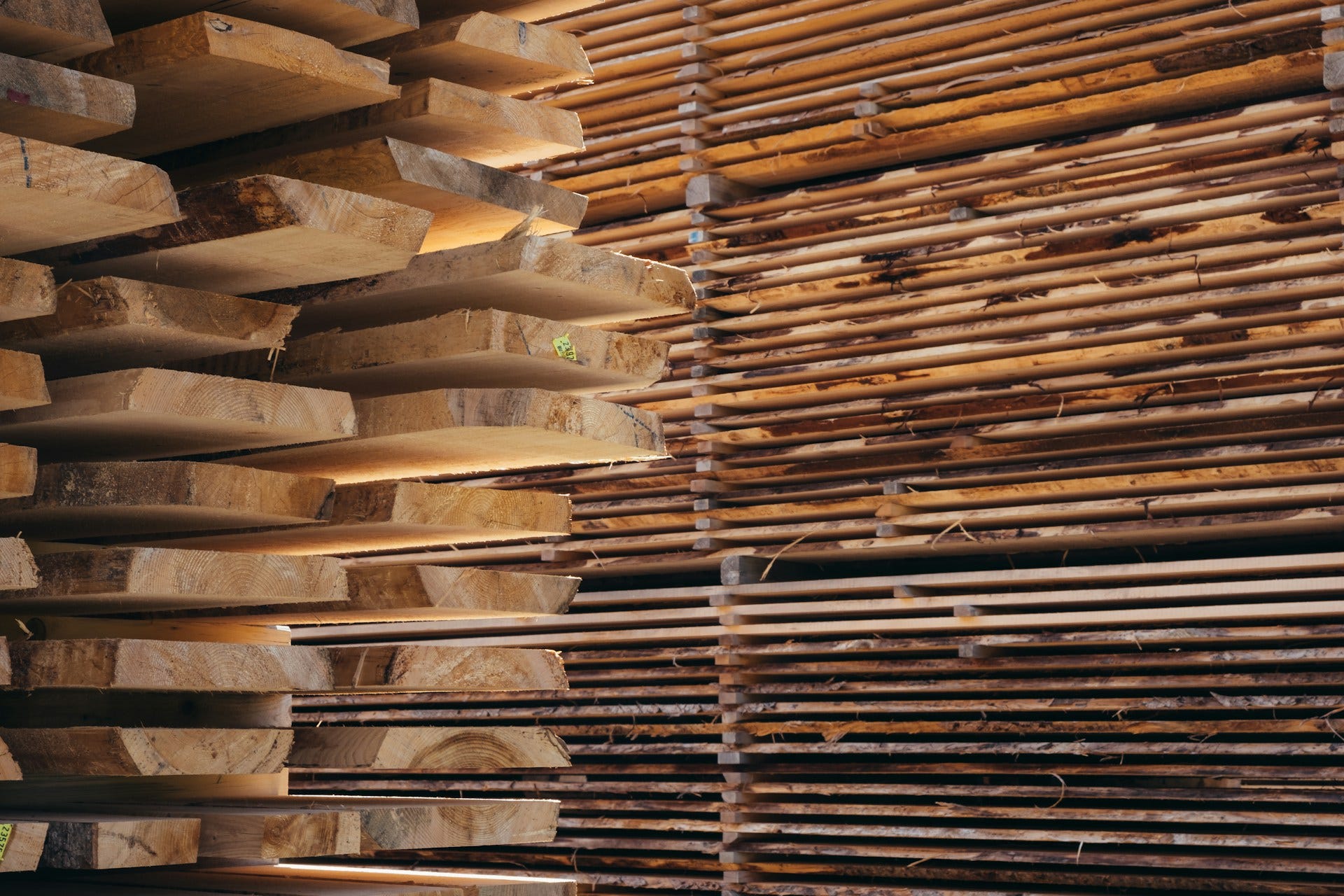
Lumber shaped my connection with him. The sawdust scent of the Grandview millworks lives yet in my nostrils, and my memory still pictures the labeled wood samples on a cord my father gathered and helped me assemble for a Boy Scout project: basswood, elm, hard and soft maple, ash, red oak, white oak, beech, birch, and elm. Then there was my one summer at Budres between junior and senior years at Ohio State: box-piling green lumber from the sawmill for air drying or kiln, loading and unloading flatbed trucks and railway cars, occasionally getting lucky enough to drive the antiquated forklift the yard guys nicknamed The Pig. This was real work, man’s work, hard and muscular, sweaty and strong. It drew men in.
Show my father sawn lumber, and he could tell you dimensions and species at a glance. Yet once I saw him eyeing the log pile of a timber operation in the hilly forest of southeastern Ohio, and he stumbled on identifying which log came from which kind of tree. His accuracy worsened when we entered uncut woods. Telling one variety of standing tree from another, he admitted, was beyond him. The man was no forester; he was a lumberman.
When he came home from an industry convention awestruck by the display of how many houses could be built from a single redwood, it wasn’t the size of the tree that impressed him. It was the single cut’s yield in logs and lumber.
The man refused to camp in the woods, said that a year’s combat across France, Holland, Belgium, and Germany had rid him of any desire to sleep again in a tent in the trees. The Battle of the Bulge cut a deep scar: a month of shivering winter days and nights, no hot food or coffee or showers, endless fighting, desperate and blind howitzer fire at Panzer tanks rumbling through the snow-clogged Ardennes woods. Camping, even in Ohio, even in summer, sucked him back there all over again, cold and frightened and longing for rescue.
Spared his trauma, I took a different path. From childhood, the woods offered escape from a difficult home life and welcomed me into a larger, wilder solace and hope. Lumber interested me only so much. But trees – massive, dark, and free – there the attraction lay.