
‘O Rew Comes Full Circle
Three cheers! The Yurok Tribe takes ownership of former sawmill site on stolen ancestral land and transforms it into a public gateway to the redwoods.

When Americans first swept into California’s North Coast in the 1850s, they were hot for money, first from gold, later from old-growth redwoods. The first step to laying their greedy hands on all that potential wealth was getting rid of the tribes who cluttered up the landscape and got in the settlers’ way. So the killings and the land theft began, year after year, decade by decade, a steady stream of bloody destruction and thievery. Some tribes were wiped out, others beaten back and down, the Yuroks among them. They lost some three-quarters of their population to shootings, disease, and poverty, and more than 90% of the tribe’s traditional territory was stolen.
These days, though, the Yurok Tribe is riding a welcome-back renaissance fueled by its own tough-it-out grit, deep knowledge of traditional lands and waters, and vision for the future. It has grown into the largest tribal nation in California, with more than 6,400 enrolled members. Besides operating a number of tourist-oriented businesses, the tribe has taken the lead in managing forests holistically, removing the salmon-stopping Klamath River dams, and restoring the condor to its historic range on the North Coast. Now, with the official opening of the ‘O Rew Redwoods Gateway on Saturday, Aug. 1, the tribe offers a showcase on educating redwoods-bound tourists on the Yurok way of life and its connection to flourishing forests and healthy rivers.
The Yurok Tribe received the site through collaboration with Save the Redwoods League, an historically unlikely partner whose transformation shows how far this country has come since the dark decades of California’s 19th-century genocide.
The league was founded in 1918 by three now-notorious white supremacists and eugenics proponents for reasons less altruistic than racist. Madison Grant, Henry Fairfield Osborne, and John C. Merriam saw the profit-driven onslaught against ancient redwoods as an analogue to an imagined assault on old-stock Americans like themselves that was propelled by incoming hordes of fast-breeding, undesirable, subhuman immigrants from Southern and Eastern Europe – an early version of today’s great replacement ideology. Wealthy men who hobnobbed with other wealthy men, the trio raised substantial donations from their monied peers and used the funds to buy redwood groves, rescue them from lumber barons, and transfer them into the public domain for permanent preservation. If the trees survived, they reasoned, so could wealthy white folks despite all those incoming Jews and Catholics,
To date, the league has conserved more than 220,000 acres and restored another 37,000. Over the decades, too, Save the Redwoods has slowly evolved from the profound racism rooted in the league’s origin story to a more inclusive perspective that accepts tribes as partners – a development that would surely give Grant, Osborne, and Merriam a shock only a eugenicist can fully appreciate. ‘O Rew is the latest example of how more and more conservation organizations that once preserved wild lands for white folks by keeping the riffraff down and out are now partnering with tribes. Call it DEI if you’re of a MAGA-leaning mind, but truth is, collaboration works.
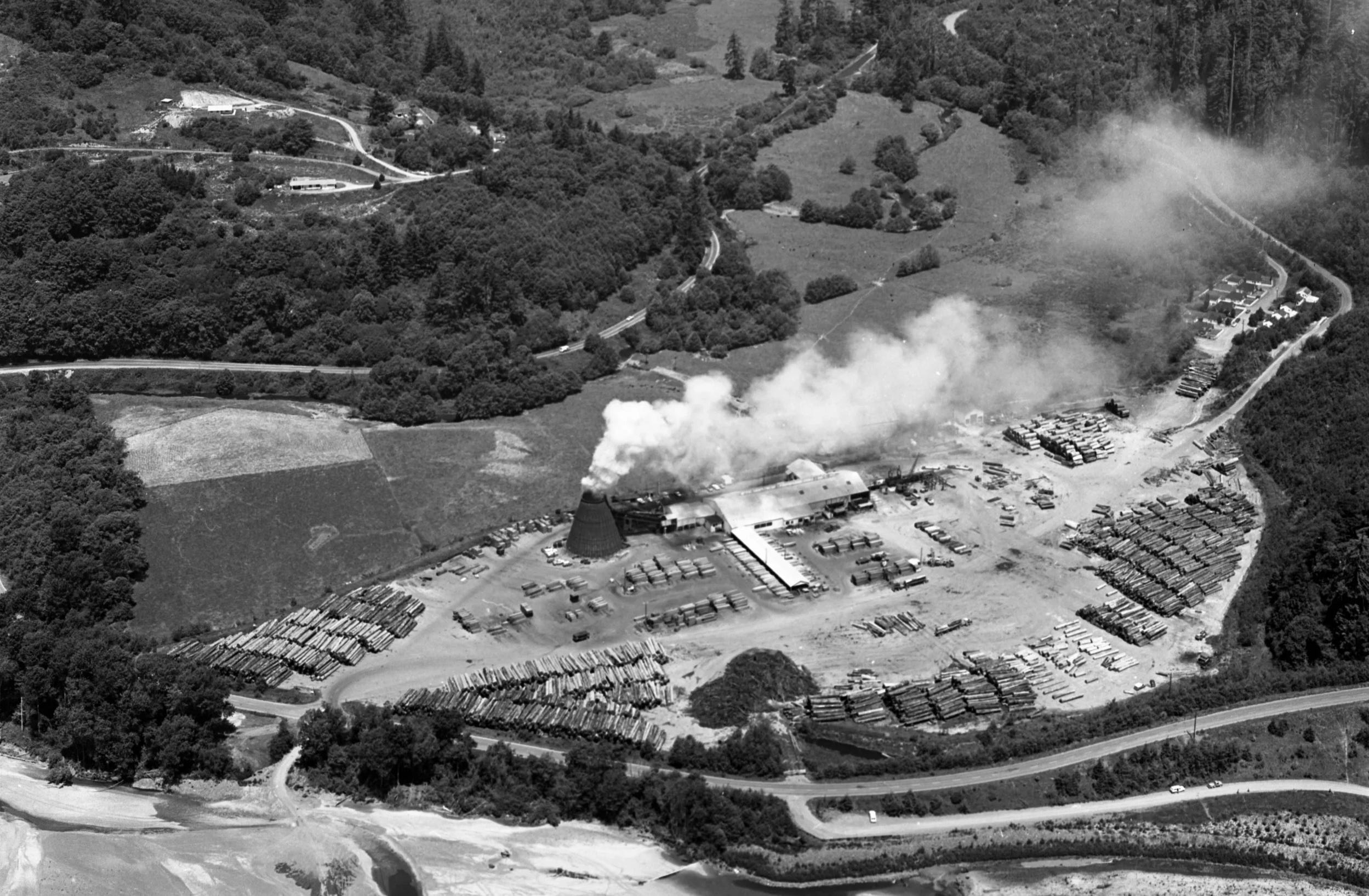
The 125-acre ‘O Rew site on Prairie Creek used to be known as Orick Mill A. The mill itself had been built in 1954 by the Arcata Redwood Company, then it was purchased in 1988 by Simpson Timber, later known as California Redwood. The mill kept sawing old-growth redwood logs into lumber until the supply dried up – the inevitable endgame for extractive enterprises – and demand dropped. The mill shut down in 2009 and was demolished following year. An unhealed mess remained: more than 20 acres of asphalt paving, crumbling concrete foundations, a large flood-protection berm, and the eroded remains of relict roadways. Only a short stretch of Prairie Creek, a prime salmon stream and fishing spot in Yurok days, had escaped paving, and that remnant was reduced to a mere trench edged by invasive weeds. When Save the Redwoods bought the site in 2013, it badly needed healing.
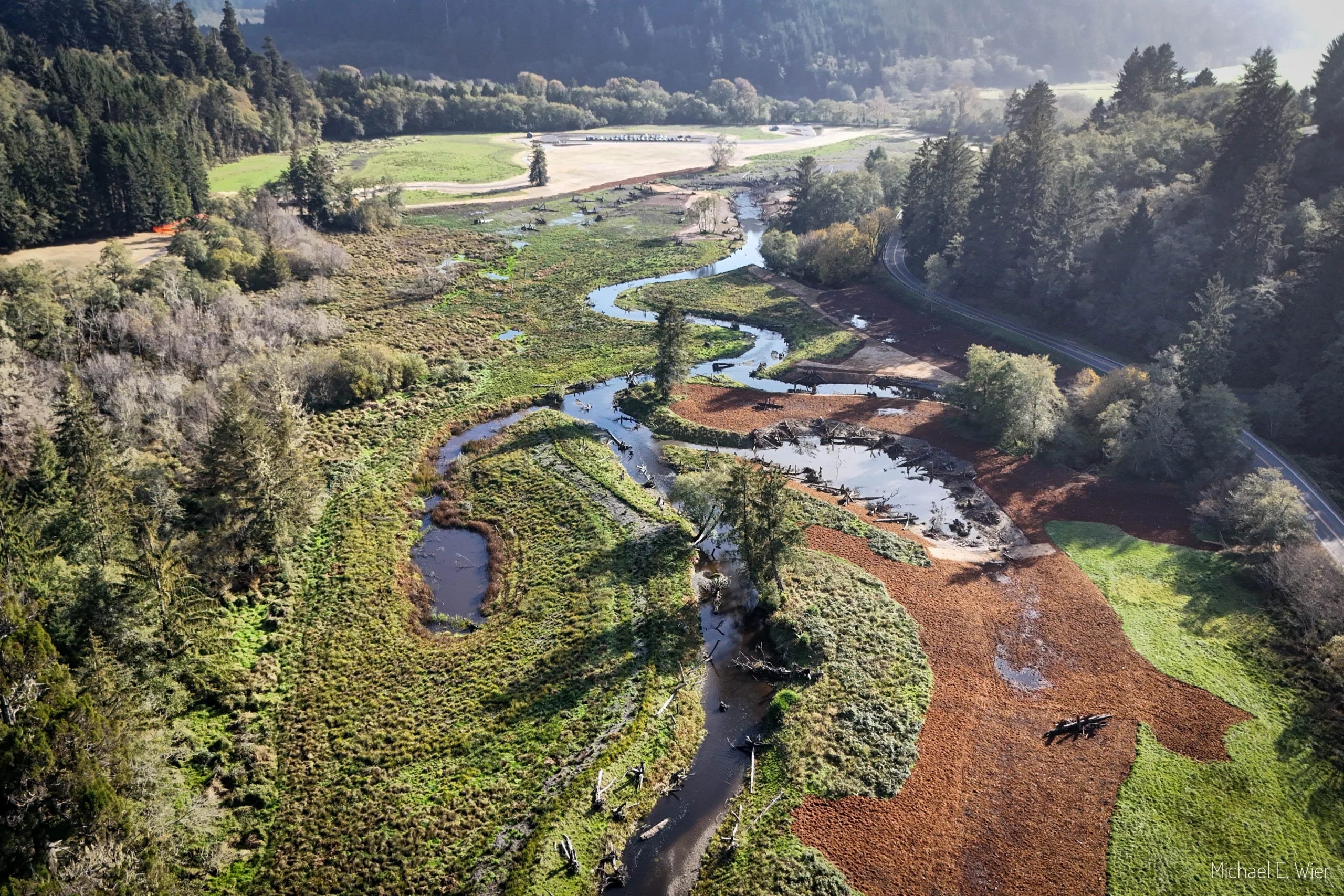
The league’s plan focused on restoring Prairie Creek, expanding public access as a southern gateway to the nearby Redwood National and State Parks, particularly the popular Lady Bird Johnson Grove, and connecting the parks’ trail networks. Save the Redwoods collaborated with Redwood National and State Parks, local agencies and organizations like California Trout and the California State Coastal Conservancy, and, most prominently, the Yurok Tribe to develop a strategic vision and plan for ‘O Rew. Starting in 2021 Yurok Tribe Construction Corporation and Yurok Fisheries Department built a one mile–long braided channel in Prairie Creek, two off-channel ponds, 20 acres of wetlands and 20 acres of upland habitat. The Yurok Revegetation Crew planted nearly a half-million native seedlings, including redwoods and black cottonwoods plus nearly 50 other species, all with an eye to creating habitat in the stream and on the banks. As the restored vegetation matures, Prairie Creek will look much as it did before colonists descended on the North Coast.
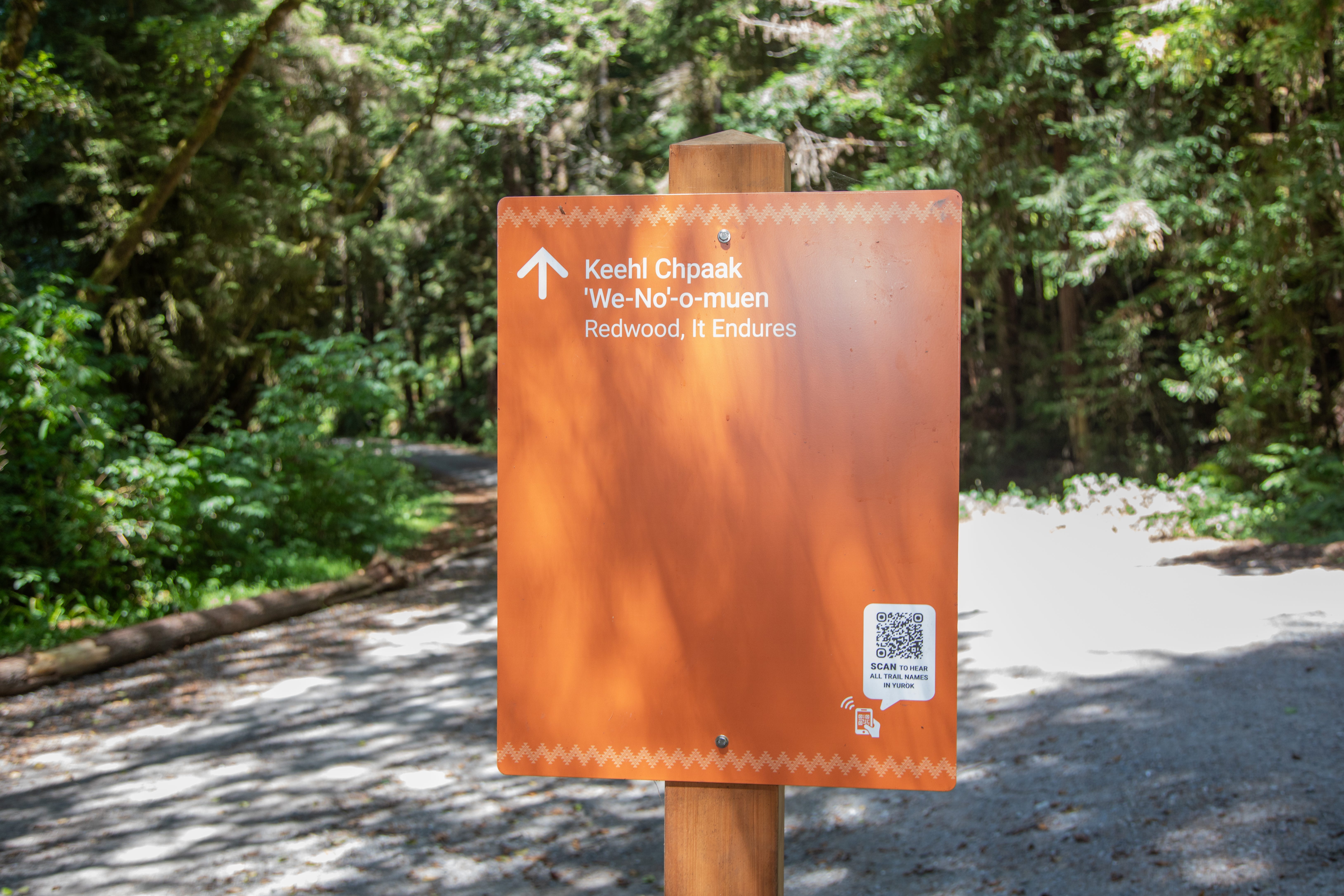
In addition to the rejuvenated stream, ‘O Rew Gateway features an information kiosk resembling a traditional Yurok house with interactive interpretive exhibits to help visitors learn about the restored landscape, the tribe’s culture and language, and its reciprocal relationship with the redwood ecosystem. Additionally, ‘O Rew offers a picnic-friendly plaza with tables, ADA-accessible trails, and an elevated vantage point delivering a panoramic view of the restored site and surrounding forest.
“When the mill operated on this property, it was a source of conflict for the Yurok people. Now, it is a point of pride and a place where our people feel welcome,” Yurok Tribal Heritage Preservation Officer Rosie Clayburn Katri told the press. “I’m really excited about what this property will look like after a decade of Indigenous land management.”
The land transfer agreement, codified in a 2024 memorandum of understanding between Save the Redwoods League, Redwood National and State Parks, and the Yurok Tribe, creates a permanent public space under tribal ownership, operation, and land management. A private ribbon-cutting ceremony was held on Friday, July 31, to celebrate the completion of the land transfer. The following morning at 8 a.m., ‘O Rew Redwoods Gateway opened to the public.
“This project represents a truly just approach to the restoration of culturally important landscapes and tribal communities,” Joseph L. James, chairman of the Yurok Tribe. “I hope it sets a national standard for collaboration between environmental protection groups and tribal nations.”
Getting there
If you’re like me, you’re already contemplating a visit to ‘O Rew before heading off for a day’s hiking in the redwoods. You’ll find it in the center of ancestral Yurok territory near the town of Orick, Calif., about 40 miles south of Crescent City and 45 miles north of Eureka, off U.S. Highway 101 at Bald Hills Road. After your visit, please leave a comment here on what the experience was like. We’d love to hear.
Rewriting a racist script
Save the Redwoods League is doing an admirable job of owning up to its origins in white supremacist conservation and changing its view of itself and its mission. The league deserve our support.
This is absolutely amazing progress in conservation of the planet. How I wish we had such endeavours in Canada’s British Columbia forests, that are being massively cut down for profit for trade to the US.